
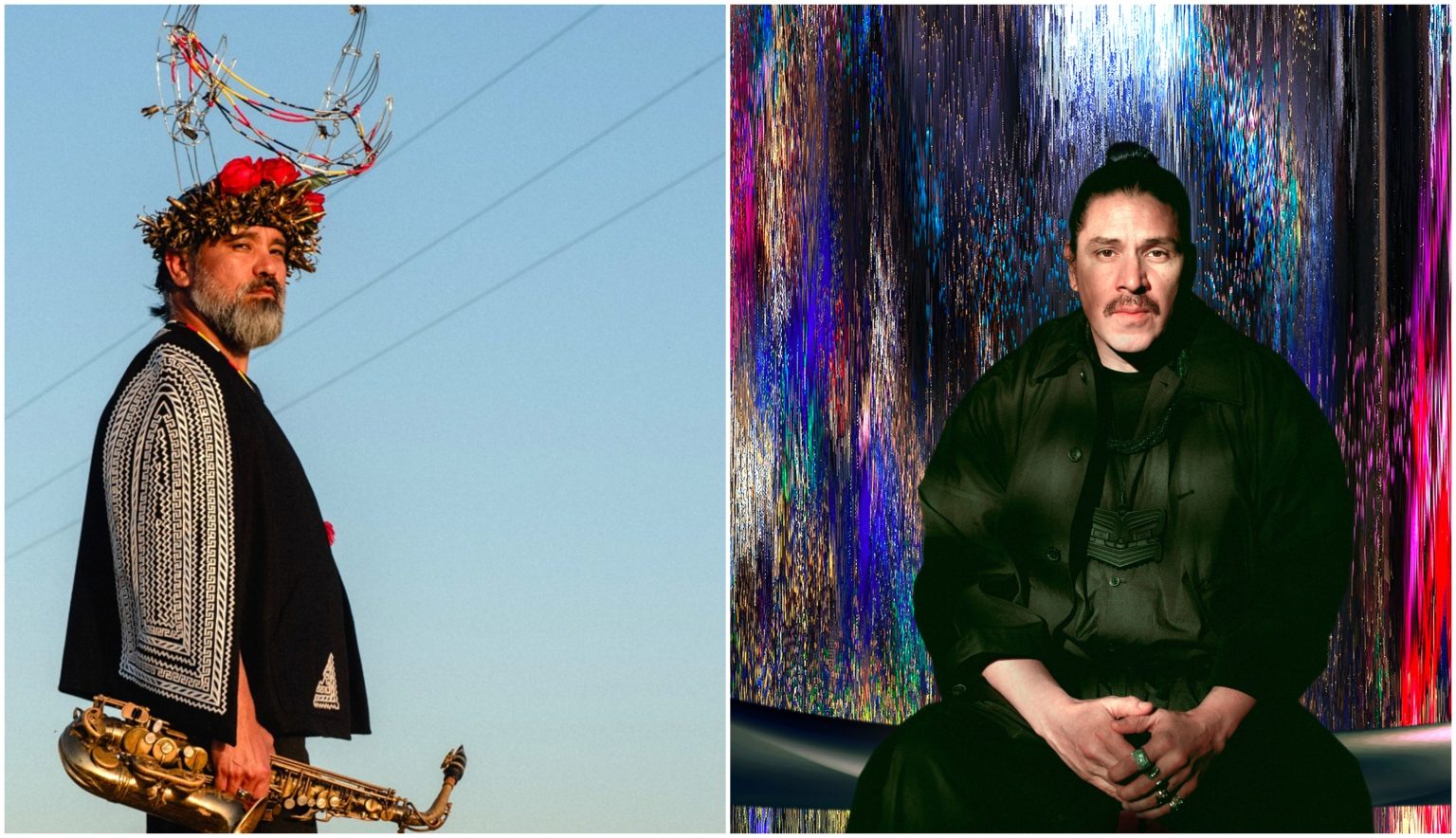

Congress just approved significant funding increases going forward for a handful of core domestic violence funding and policy initiatives. But at the same time, many services for survivors face a new level of unpredictability. Victim support funds in some states plummeted as much as 70%, leaving states to try and cover some of those costs. The Trump administration instituted requirements that domestic violence survivors prove their immigration status before being allowed into shelters and certain long-time domestic violence services remain a target in upcoming federal budget talks. We’ll get a picture of the current trends for domestic violence prevention.
Past Shows
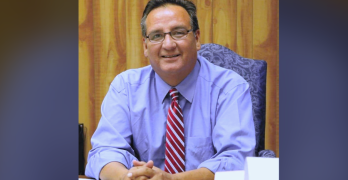
Friday, February 20, 2026 – Remembering Osage leader Jim Gray
Former Osage Principal Chief Jim Gray is remembered as a leader who laid the foundation for a modern, self-governing tribal structure while also reconnecting the tribe with its cultural roots. Among his many accomplishments as a transformative leader, Jim Gray spearheaded the historic reform of Osage government in 2004. That secured the individual right to vote for each Osage citizen rather than headright ownership and restored the Nation’s sovereign status. During his time as principal chief, the Nation also successfully negotiated a landmark $380 million settlement with the U.S. government — at the time the largest of its kind — addressing decades of tribal trust fund mismanagement. All the while, he remained a determined advocate for cultural and language revitalization. Gray walked on this month. We’ll hear from his family and friends about his legacy.
We’ll also remember Black civil rights leader, Rev. Jesse Jackson, who died this week at the age of 84. Jackson championed various Native causes throughout his career including opposition to nuclear waste dumping on tribal lands and support for the Dakota Access Pipeline protests.
GUESTS
Olivia Gray (Osage), wife to Jim Gray
Hepsi Barnett (Osage), former chief of staff and government reform coordinator for the Osage Nation
Yancey Red Corn (Osage, Caddo, and Potawatomi), actor, CEO of White Buffalo Alliance and nephew to Jim Gray
Suzan Shown Harjo (Cheyenne and Hodulgee Muscogee), president of the Morning Star Institute and recipient of the Presidential Medal of Freedom
Thursday, February 19, 2026 – The growing AI appropriation threat
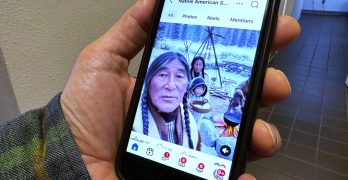
Native Americans have worked hard for decades to counter the stereotypes perpetuated in old movies and television shows about the American West. Now a new generation of Native technology experts worry that artificial intelligence is eroding that work. Scores of AI-generated images and videos are flooding people’s social media For You pages. The creations are within easy reach of anyone typing a prompt into any AI generator that scrapes information from millions of sources. Often posted by anonymous creators, the products of those prompts present vaguely Native visual and audio characteristics with little to no authentic cultural connections. Along the way they generate hundreds of thousands of admirers. We’ll talk about the work to counter the looming onslaught of AI cultural appropriation.
GUESTS
Dr. Angelo Baca (Diné and Hopi), professor of history, philosophy, and social sciences at the Rhode Island School of Design
Trevor Reed (Hopi), professor of law at the University of California, Irvine School of Law and an associate justice for the Hopi Tribe Court of Appeals
Dr. Tamika Worrell (Gamilaroi), senior lecturer of critical Indigenous studies at Macquarie University

Wednesday, February 18, 2026 – Native in the Spotlight: Keeya Wiki
Keeya Wiki (Yurok and Maori) is not yet old enough to vote, but she is making waves in official discussions about climate policy and environmental sustainability. She was among a group of young people who made a historic kayak journey down the Klamath River from its source in the Cascade Mountains to its confluence with the Pacific Ocean after the largest dam removal project in history. It was both a celebration of her tribe’s accomplishments and a statement about what she sees as the future of successful, tribally-driven environmental policy. Since then she has also served as a delegate to the U.N.’s recent climate summit in Brazil. We’ll hear about her determined and creative intersection of cultural knowledge and modern climate activism.
Tuesday, February 17, 2026 – Will limiting commercial trawler bycatch save salmon in Alaska?
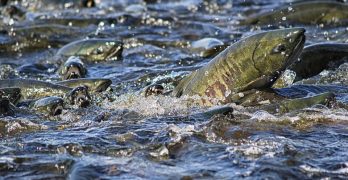
The federal panel that oversees commercial and subsistence fishing in Alaska is putting a hard limit on the number of chum salmon that are caught — and wasted — by commercial pollack trawlers. It is a long awaited — and controversial — decision by the North Pacific Fishery Management Council after years of outcry by tribes to address the factors that go into the disappearing runs of salmon that Alaska Native people have always relied on for survival. Although presented as a compromise, the bycatch limit is seen as a severe blow by commercial fishers, who say such restrictions could be catastrophic to the industry. The decision comes as the state also instituted severe regional restrictions on king salmon fishing because of low numbers. They are among the latest measures to address the big and complex ecological threats to what is historically the most productive salmon fishery in the world.

Monday, February 16, 2026 — Tribes come to grips with $1.5 billion federal funding retraction
With help from Congress, the Trump Administration stripped some $1.5 billion in federal funds previously promised to tribes. A lot of that was in the form of contracts for clean energy manufacturing and development — new money doled out three years earlier as part of President Joe Biden’s Inflation Reduction Act. A new analysis by the Brookings Institution identifies three funding and policy changes, including reductions in SNAP and Medicaid, that negatively affect Native Americans. The research firm says the actions continue a pattern of disinvestment and falls short of the federal government’s binding responsibility to Indian Country.

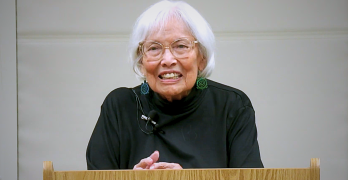
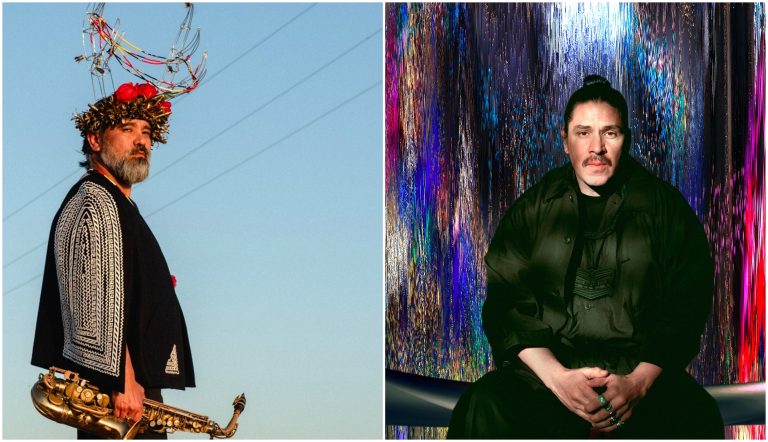
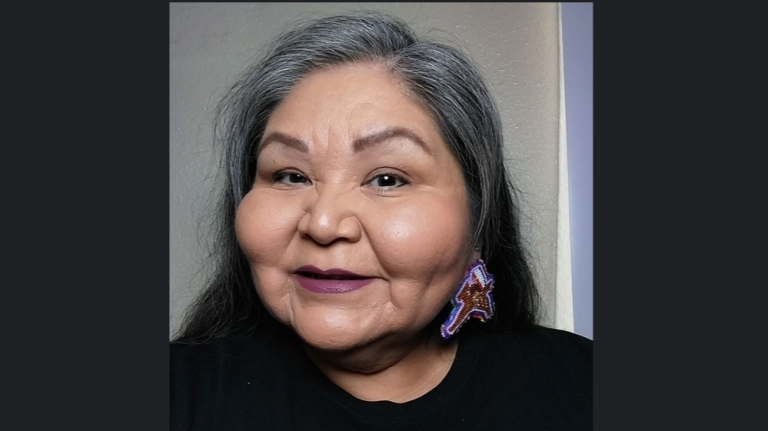
NAC @ Santa Fe Indian Market
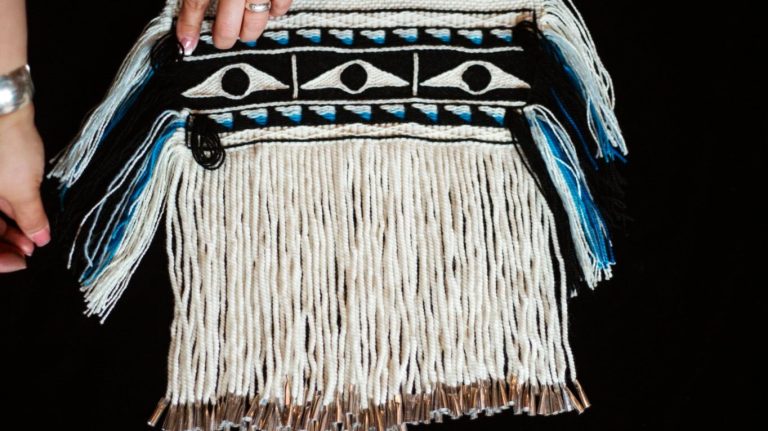
After 103 years, the Santa Fe Indian Market remains the biggest draw for Native artists, potters, and jewelry makers as well as those who appreciate and collect their work. More than 1.000 juried participants come from hundreds of Native communities, offering a hugely diverse range of inspiring work. We’ll take a small sample of that creativity and check in on the outlook for Native arts and arts education.
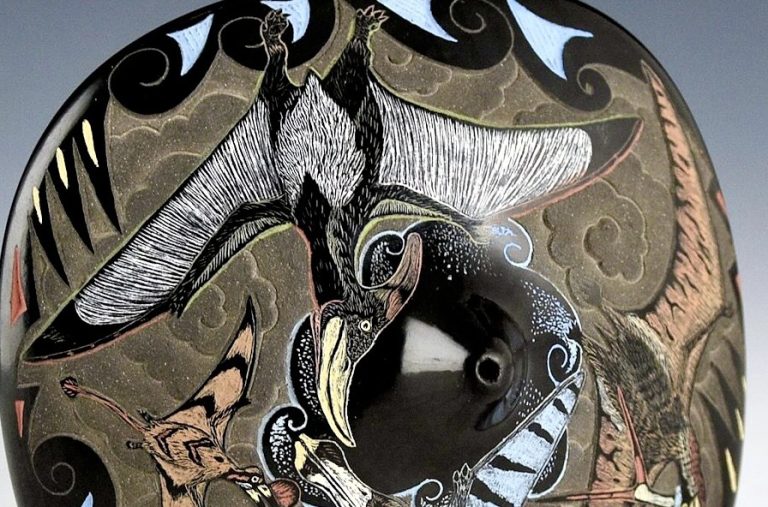
Distinctly Native American artwork, fashion, and films converge again for the annual Santa Fe Indian Market, with at least 1,000 booths and somewhere around 100,000 visitors. Native America Calling is live from Santa Fe, hearing from Southwestern Association for Indian Arts representatives, 2023 Best In Show winner Jennifer Tafoya, curators from the Native Cinema Showcase, and others to get a preview of the largest juried Native art market in the world.
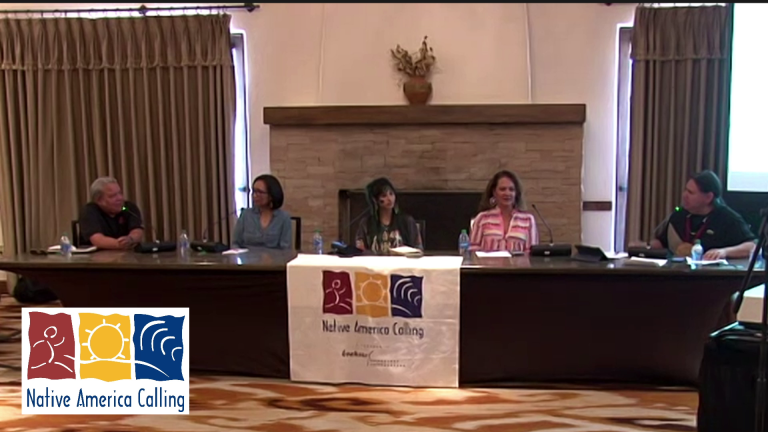
Listen back to Native America Calling’s live broadcast from the Santa Fe Indian Market featuring host Shawn Spruce and guests Dawn Houle (Chippewa Cree from Rocky Boy Montana), Mandolin Rain Song (Taos Pueblo), Jennifer Johns (Diné), and Jason Garcia (Santa Clara Pueblo).
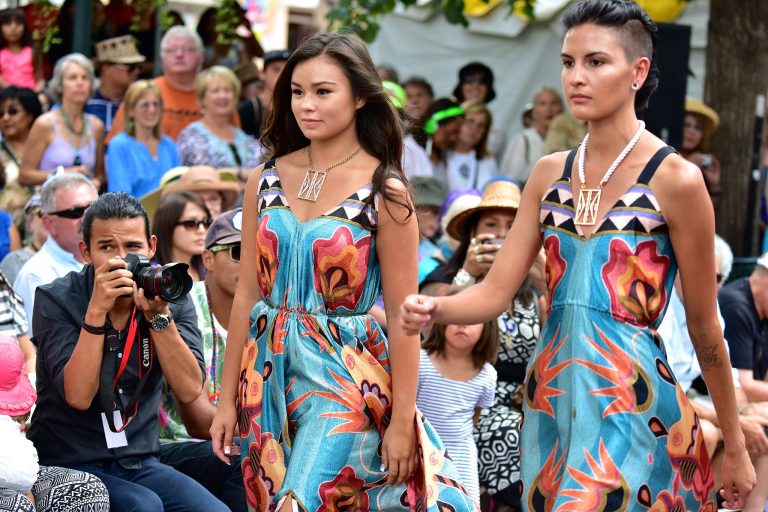
Artists from hundreds of Native nations are tending to their booths in the streets of Santa Fe, selling works they’ve labored for months to prepare. SWAIA’s Santa Fe Indian Market has come a long way in 100 years. Today on Native America Calling, Shawn Spruce is live from Indian Market for a second day with Dr. Suzanne Newman Fricke, director of Gallery Hózhó at Hotel Chaco; Dr. Robert Martin (Cherokee), Institute of American Indian Arts president, to get a feel for what’s in store for the next century; Amber Dawn Bear Robe (Siksika Nation), Indigenous Fashion Show producer for the Southwestern Association for Indian Arts and art history professor at the Institute for American Indian Arts; Dr. Jessica Metcalfe (Turtle Mountain Chippewa), owner of Beyond Buckskin; and Kristin Gentry (Choctaw), artist, photographer, writer, and curator.
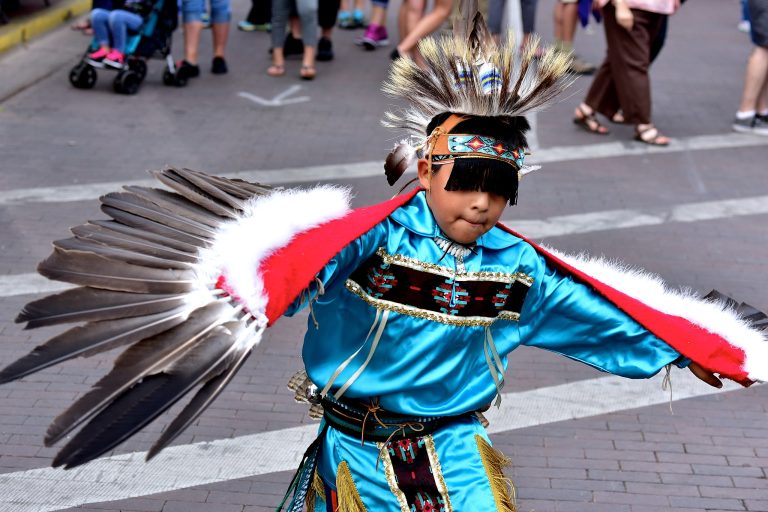
It survived the Termination Era, The Depression, a World War, and, most recently, a pandemic. The Southwestern Association for Indian Arts marks the 100th Santa Fe Indian Market, a place to buy works directly from artists, to experience the creative vision of Native designers, and watch films by Indigenous filmmakers.
Today on Native America Calling, Shawn Spruce is live from the Market to get a rundown of this year’s schedule and reflect on the evolution of this major achievement of Native creativity and commerce with Cindy Benitez, program manager for the Native Cinema Showcase by the National Museum of the American Indian; film director Fritz Bitsoie (Diné);Stephine Poston (Pueblo of Sandia), board chair for the Southwestern Association for Indian Arts; and Leah Salgado (Pascua Yaqui), Chief Impact Officer for Illuminative.
