New Mexico is taking on an investigation into the sterilization of Native American women through coercion, deception or by merely carrying out procedures entirely without consent. The state is mainly looking at time in the 1970s following the establishment of the federal Office of Population Affairs and a policy change that increased reimbursements for outside doctors contracting with Indian Health Service facilities for each procedure. Native Americans were included in groups targeted for sterilizations because of the false impression they were less intelligent and that they weren’t as productive members of society as other groups. In 10 years, Native American birth rates were more than halved. Other states and Canada have broached the topic of forced sterilization that tried to formalize racist policies in the name of public health. New Mexico is the first to take aim at the role IHS clinics played in carrying out the policies.
Past Shows
Wednesday, March 11, 2026 – Michigan backs away from Boarding Schools report
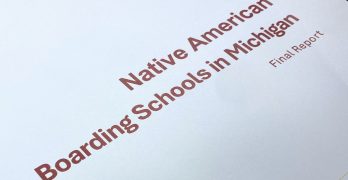
A 300-page report details the history and ongoing implications of Michigan’s role in the Indian Boarding School era. It includes dozens of interviews, public records, and a list of recommendations for state officials going forward. It details troubling accounts that have become familiar in the discussion about boarding schools — physical and sexual abuse of Native American students, oppressive methods to enforce assimilation, and limited accountability for anyone involved. But the state’s Department of Civil Rights is backing away from the report. After investing almost $1 million, the state is declining to release the final document to the public. It has since been posted online by the news site Bridge Michigan. We’ll talk to those involved about what is in the report and what it means that the state is not backing it.
We’ll also get perspective on the appointment of U.S. Sen. Markwayne Mullin (Cherokee/R-OK) as the Secretary of Homeland Security. We’ll hear from people who know and are familiar with his work as a longtime elected leader in Oklahoma.
GUESTS
April Lindala (Mohawk and Delaware), department head for Native American Studies at Northern Michigan University
Jo Ann Kauffman (Nez Perce), founder of Kauffman and Associates
Wes Nofire (Cherokee), former Oklahoma Native American Liaison, former Cherokee Nation council member, and former professional athlete
Allen Wright (Choctaw), president and founder of the Hustings Group
Ron French, senior writer at Bridge Michigan

Tuesday, March 10, 2026 – Elections watchers prepare for Midterm complications
Voting rights advocates say a bill to overhaul elections could disenfranchise millions of Americans, especially Native American and other minority voters. Among other things, the SAVE Act requires all voters to prove their U.S. citizenship, either with a passport or a birth certificate. Numerous studies show Native Americans are less likely to have a valid passport or other documents readily available that prove their place of birth than other groups. It would have major implications for mail-in ballots. The bill passed the House. President Donald Trump added new pressure on members of his own party in the Senate, saying he will not sign any other legislation until the SAVE Act clears Congress. We’ll find out the details of the legislation and look ahead to how this and other measures might complicate the Midterm Elections.
We’ll also hear from Allison Renville (Sisseton-Wahpeton Dakota) about her decision to suspend her campaign for governor of South Dakota. Renville was running as an independent voice in the state that also elected Kristi Noem as governor. She cites the enormous cost of running a major campaign as a deterrent to welcoming diverse political voices.
GUESTS
Jacqueline De León (Isleta Pueblo), senior staff attorney for the Native American Rights Fund
Lenny Fineday (Leech Lake Band of Ojibwe), general counsel for the National Congress of American Indians
Jaynie Parrish (Diné), executive director and founder of Arizona Native Vote
Allison Renville (Sisseton and Hunkpapa Lakota and Omaha and Haudenosaunee), activist and political strategist

Monday, March 9, 2026 – Surviving cancer
For many Native American survivors, a cancer diagnosis is more than just a biological battle. It is a matter of balancing modern oncology with community and cultural context. American Cancer Society data show a historic 70% five-year survival rate across the general population, but Native Americans continue to face unique hurdles, from geographic isolation to chronic underfunding of the Indian Health Service. Despite these disparities, survivors are reclaiming their narratives by integrating traditional healing practices with cutting-edge science. We’ll hear from Native survivors in the context of the ongoing advancements in cancer diagnosis and treatment.
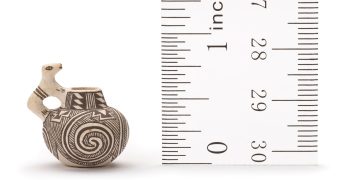
Friday, March 6, 2026 — Notable events: Heard Museum art fair and Native culture in miniature
A select few Native American artists choose to express their cultural and creative passions in miniature. An exhibition starting this month at the National Museum of Toys and Miniatures celebrates those artists who make distinctive pottery, baskets, and carvings on a decidedly downsized scale.
The top Indigenous beaders, potters, painters, and weavers are headed to the Heard Museum in Phoenix, Ariz. for that institution’s 68th annual Indian Art Fair and Market. The Heard welcomes more than 600 artists from all over the world for what has become one of the must-go events for both artists and collectors.
We’ll hear from organizers and artists from both of these events.
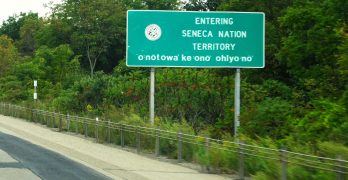
Thursday, March 5, 2026 — Taxes, roads, and law enforcement: how tribes are asserting their sovereign rights
The Seneca Nation in New York is working to correct longstanding confusion over law enforcement on their land. A nearly 80-year-old federal statute handed the state control over certain crimes on Seneca Nation’s territory. A bill in Congress could chart a path to resolving that conflict.
In Oklahoma, a Muscogee Nation citizen argues that those who work and live on the tribal land do not have to pay state income taxes. That argument could now be headed to the U.S. Supreme Court. The issue comes nearly six years after the landmark McGirt v. Oklahoma Supreme Court decision that confirmed Muscogee authority over criminal matters on tribal land. This current battle would extend that authority to civil cases.
And the Lac du Flambeau Ojibwe tribe in Wisconsin is facing off with U.S. Attorney General Pam Bondi over outside access to a road that traverses tribal land. Bondi backs an effort to force the tribe to reimburse a nearby town for fees to access the road. We’ll find out the potential implications of these cases.
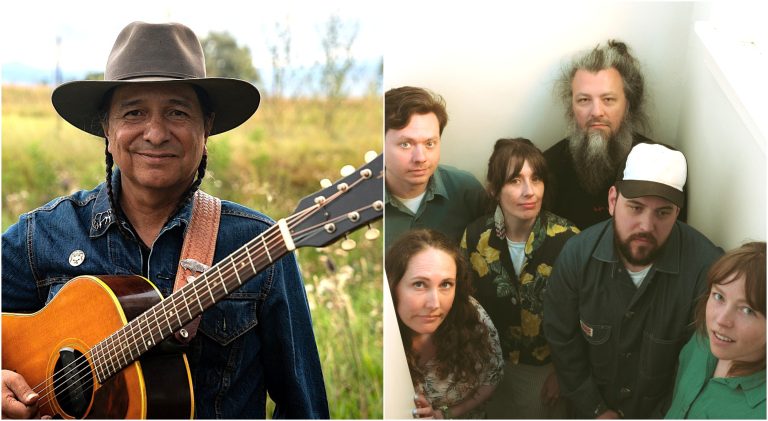

NAC @ Santa Fe Indian Market
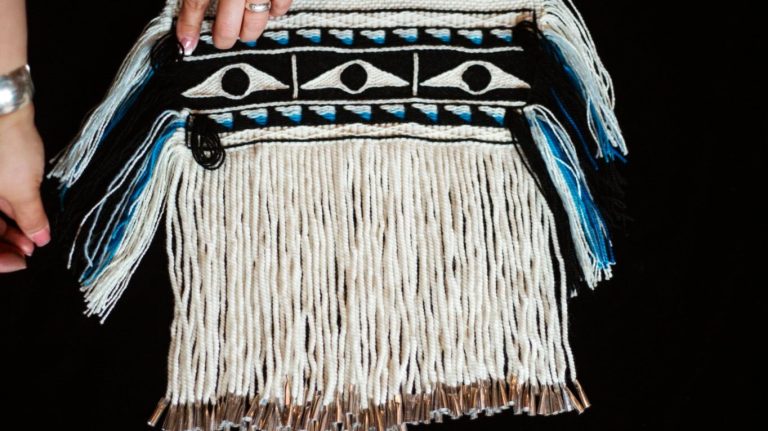
After 103 years, the Santa Fe Indian Market remains the biggest draw for Native artists, potters, and jewelry makers as well as those who appreciate and collect their work. More than 1.000 juried participants come from hundreds of Native communities, offering a hugely diverse range of inspiring work. We’ll take a small sample of that creativity and check in on the outlook for Native arts and arts education.
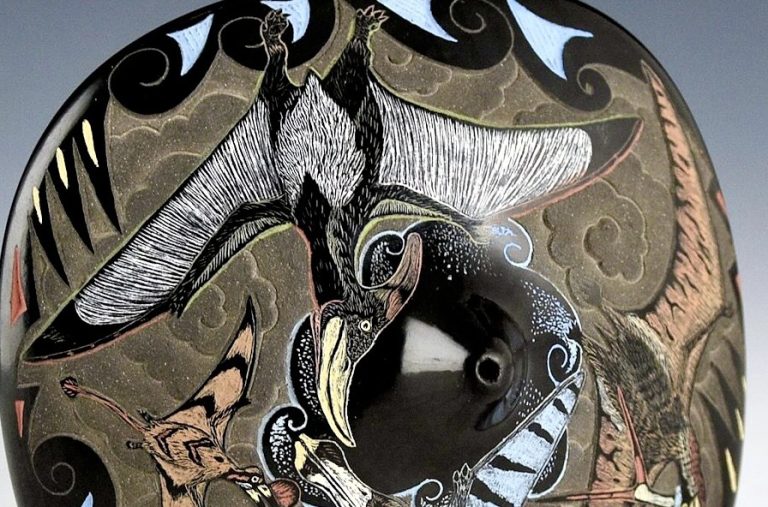
Distinctly Native American artwork, fashion, and films converge again for the annual Santa Fe Indian Market, with at least 1,000 booths and somewhere around 100,000 visitors. Native America Calling is live from Santa Fe, hearing from Southwestern Association for Indian Arts representatives, 2023 Best In Show winner Jennifer Tafoya, curators from the Native Cinema Showcase, and others to get a preview of the largest juried Native art market in the world.
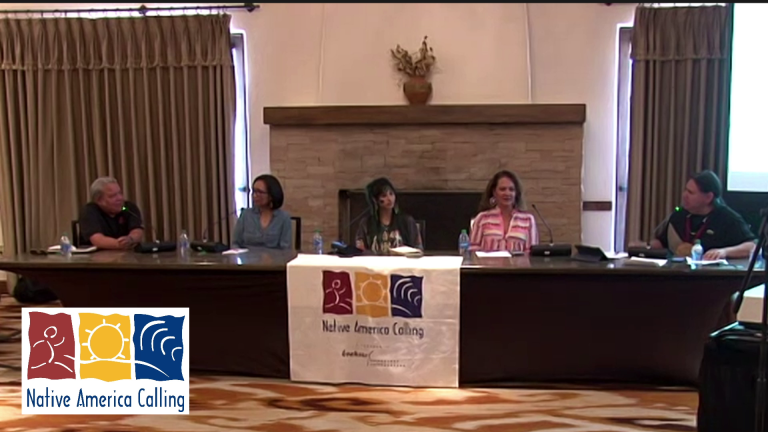
Listen back to Native America Calling’s live broadcast from the Santa Fe Indian Market featuring host Shawn Spruce and guests Dawn Houle (Chippewa Cree from Rocky Boy Montana), Mandolin Rain Song (Taos Pueblo), Jennifer Johns (Diné), and Jason Garcia (Santa Clara Pueblo).
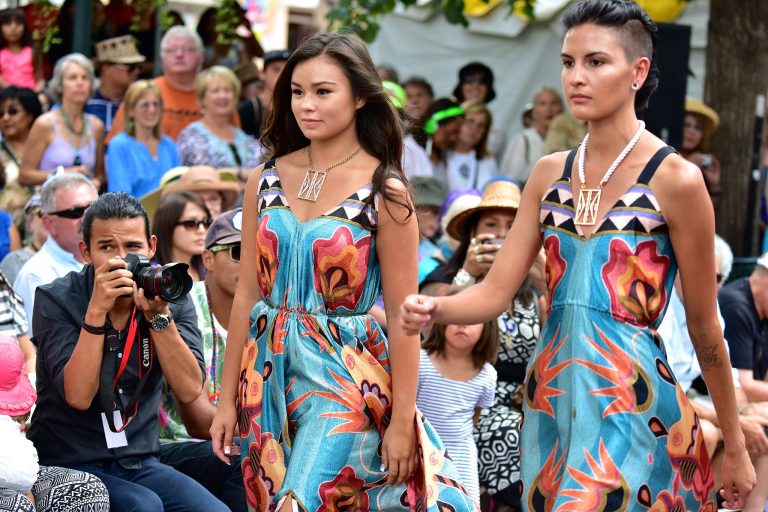
Artists from hundreds of Native nations are tending to their booths in the streets of Santa Fe, selling works they’ve labored for months to prepare. SWAIA’s Santa Fe Indian Market has come a long way in 100 years. Today on Native America Calling, Shawn Spruce is live from Indian Market for a second day with Dr. Suzanne Newman Fricke, director of Gallery Hózhó at Hotel Chaco; Dr. Robert Martin (Cherokee), Institute of American Indian Arts president, to get a feel for what’s in store for the next century; Amber Dawn Bear Robe (Siksika Nation), Indigenous Fashion Show producer for the Southwestern Association for Indian Arts and art history professor at the Institute for American Indian Arts; Dr. Jessica Metcalfe (Turtle Mountain Chippewa), owner of Beyond Buckskin; and Kristin Gentry (Choctaw), artist, photographer, writer, and curator.
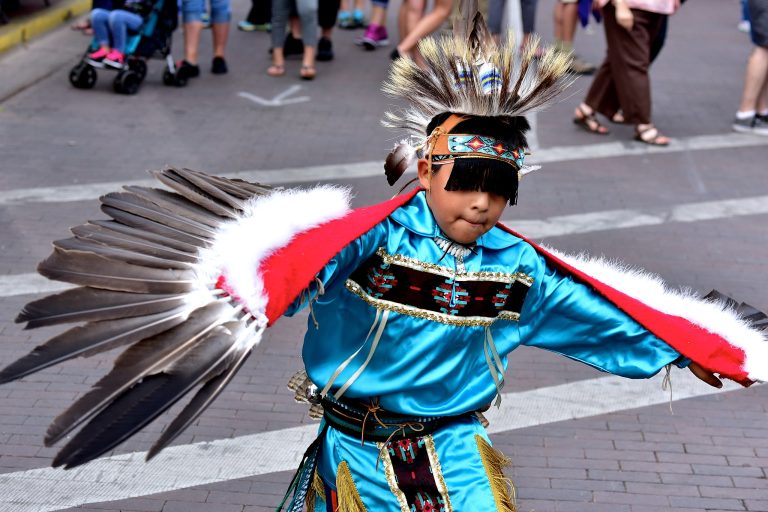
It survived the Termination Era, The Depression, a World War, and, most recently, a pandemic. The Southwestern Association for Indian Arts marks the 100th Santa Fe Indian Market, a place to buy works directly from artists, to experience the creative vision of Native designers, and watch films by Indigenous filmmakers.
Today on Native America Calling, Shawn Spruce is live from the Market to get a rundown of this year’s schedule and reflect on the evolution of this major achievement of Native creativity and commerce with Cindy Benitez, program manager for the Native Cinema Showcase by the National Museum of the American Indian; film director Fritz Bitsoie (Diné);Stephine Poston (Pueblo of Sandia), board chair for the Southwestern Association for Indian Arts; and Leah Salgado (Pascua Yaqui), Chief Impact Officer for Illuminative.
