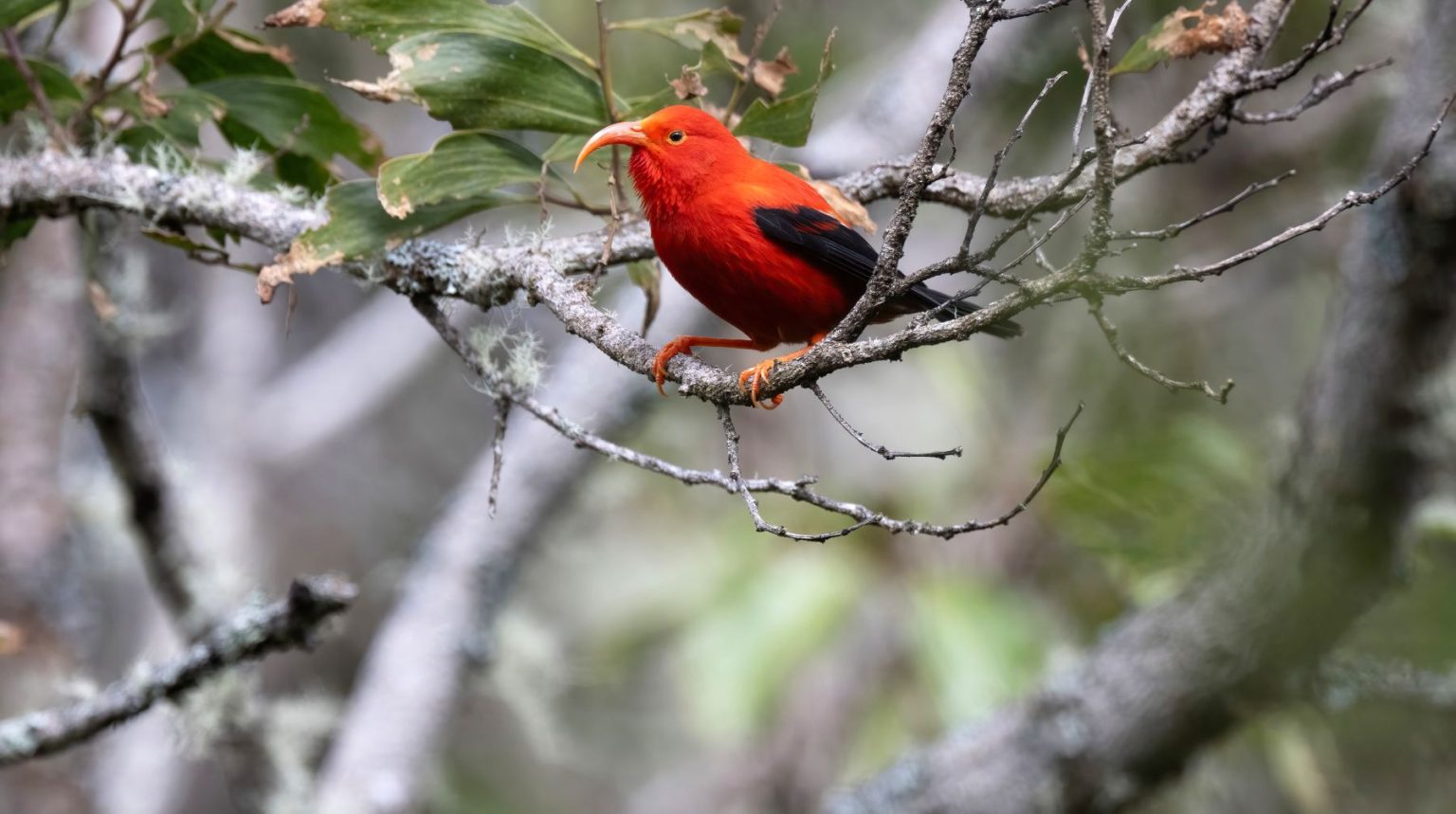
Honeycreepers only live in Hawai’i and the birds are interwoven into Native Hawaiian culture. Feathers from the strikingly colorful birds are a key part of ceremonial cloaks and other regalia. The birds themselves are prominent in cultural stories. But of the more than 50 original species of honeycreepers, only 17 survive—and those are threatened with extinction. Several factors contribute to the population decline, but a pressing concern is a mosquito-borne avian malaria. We’ll hear from Native Hawaiian conservationists on the efforts to save these unique and important birds.
Past Shows

Wednesday, February 25, 2026 — The Menu: Commod Bods, a standout frybread stand, and Afro-Indigenous mutual aid in Minneapolis
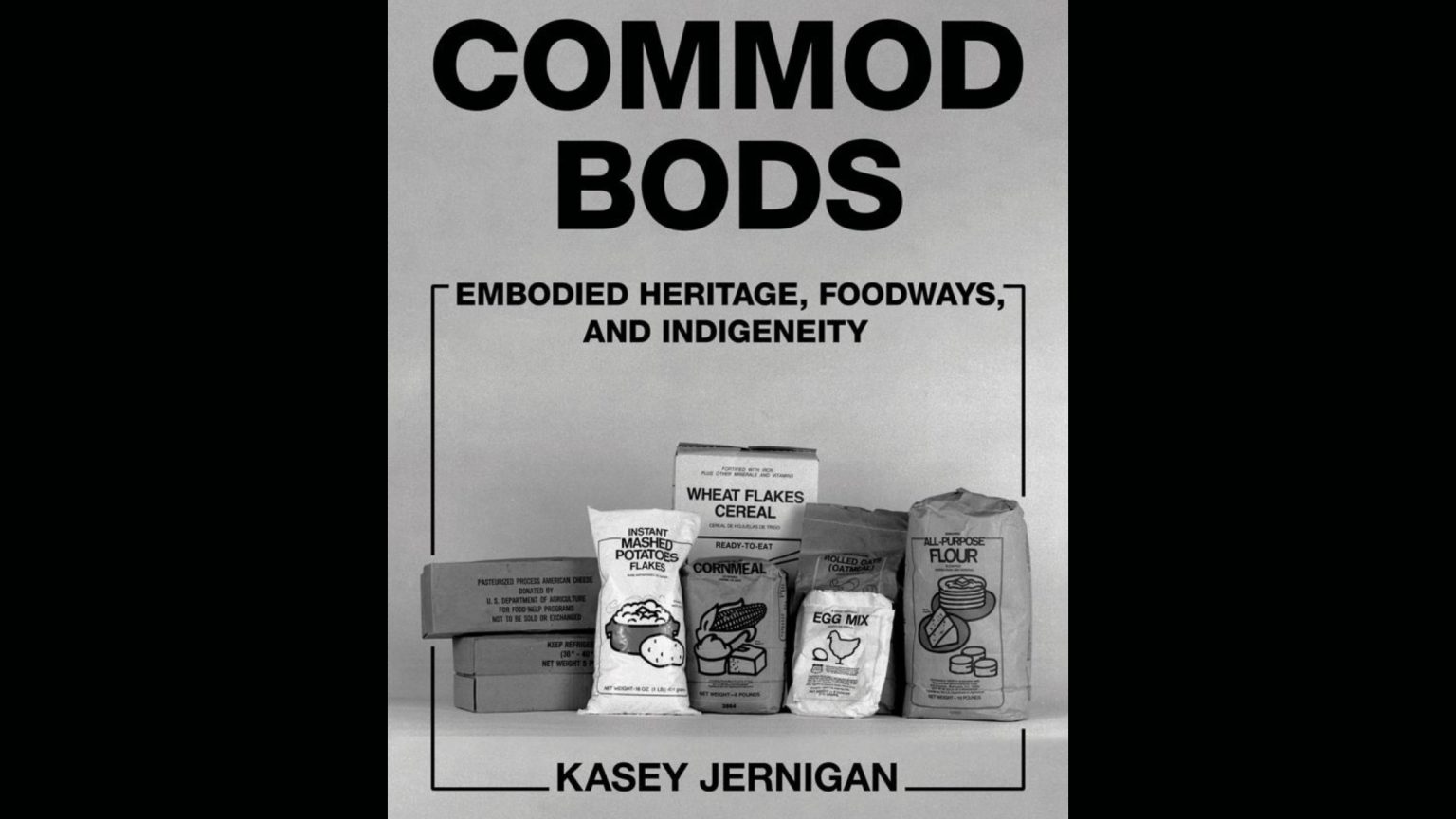
Kasey Jernigan (Choctaw) interviewed and observed Choctaw women over a period of years about food and their relationships to it. She documents what she learned in those observations in her new book, “Commod Bods: Embodied Heritage, Foodways and Indigeneity”. The book uses federal food and nutrition assistance as the jumping off point for an exploration of individual perceptions of food and colonial influences on Native health outcomes.
A quaint eatery in Arizona’s Salt River Pima-Maricopa Indian Community is attracting attention over and above the dozens of other frybread stands that dot reservation roadsides across the country. The Stand was just named one of USA Today’s 2026 Restaurants of the Year. It’s built by the same person who makes the frybread dough and serves the soup in a decidedly rustic setting.
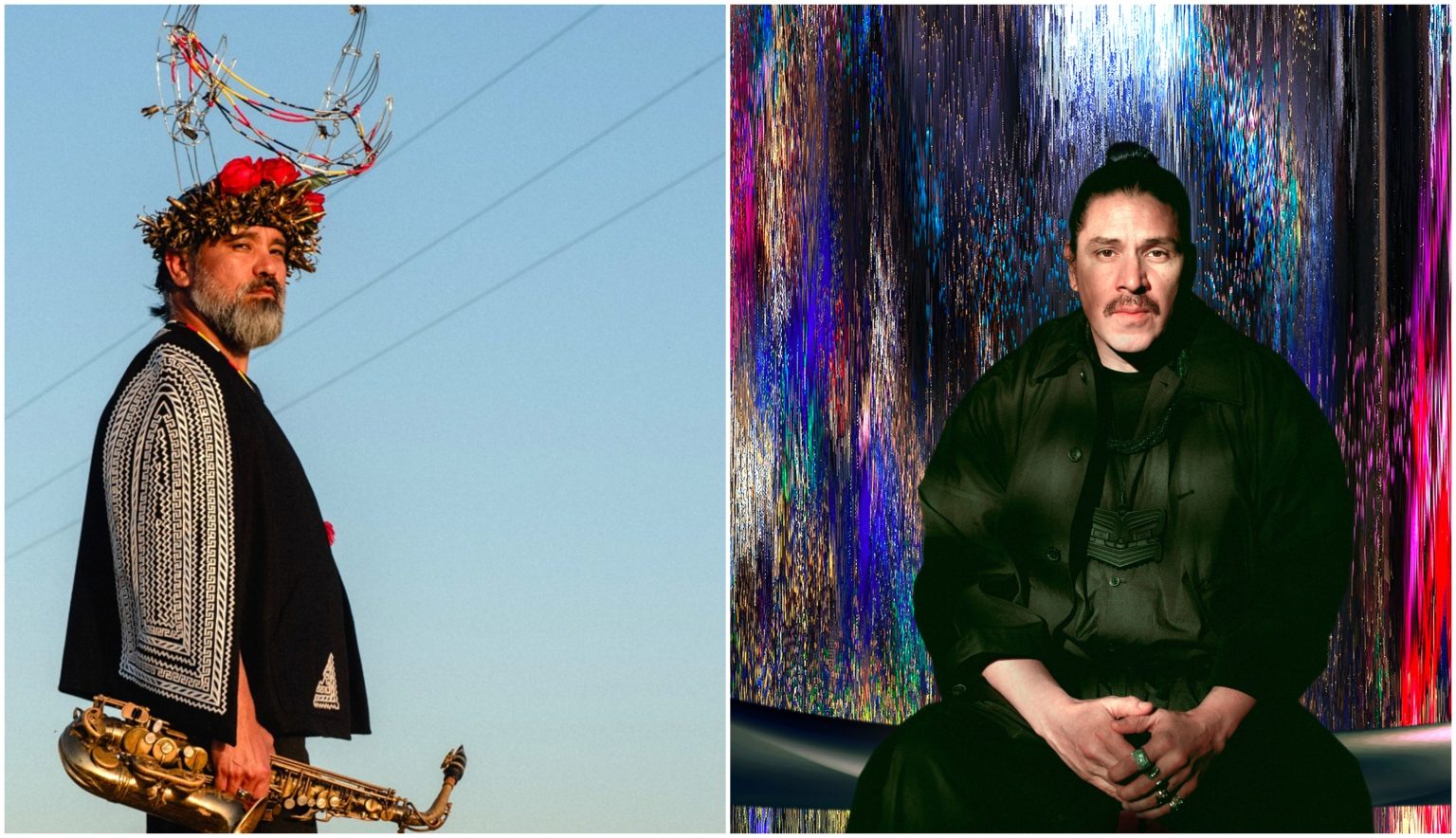
Marique B. Moss explores her Black and Indigenous identity in her poetic memoir, “Sweetgrass and Soul Food”. She is among the Native people offering support to Minneapolis residents in the wake of the expanded immigration efforts from her space, Mashkiki Studios.
GUESTS
Dr. Kasey Jernigan (Choctaw), assistant professor of American studies and anthropology at the University of Virginia and the author of “Commod Bods: Embodied Heritage, Foodways, and Indigeneity”
Michael Washington (Pima and Maricopa), co-owner of The Stand
Marique Moss (Mandan, Hidatsa and Arikara and Dakota), owner of Mishkiki Studios, author, and cultural educator
Tuesday, February 24, 2026 — Native Bookshelf: “Blood Relay” by Devon Mihesuah
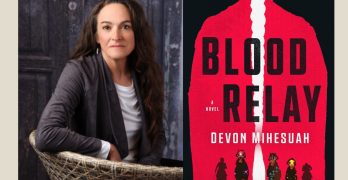
Choctaw homicide detective Perry Antelope works on a missing persons case alongside the Choctaw Lighthorsemen tribal police in Devon Mihesuah’s (Choctaw) new mystery novel, “Blood Relay“. The story of the disappearance of a young athlete is set against the backdrop of the competitive bareback horse relay racing. The fictional fast-paced thriller also takes on the real-life issue of missing and murdered Indigenous relatives and the evolving jurisdictional complexities between federal, state, and tribal law enforcement in Oklahoma. Mihesuah, a historian and the Cora Lee Beers Price Teaching Professor at the University of Kansas, continues her tradition of creating strong leading women. She’s the author of the detective Monique Blue Hawk series (“Document of Expectations”, “Dance of the Returned“ and “The Hatak Witches“) and the 2024 collection of horror stories, “The Bone Picker“. She authored several non-fiction titles including “Recovering Our Ancestors’ Gardens: Indigenous Recipes and Guide to Diet and Fitness”. We add Mihesuah’s Blood Relay to our Native Bookshelf.

Monday, February 23, 2026 – Assessing the outlook for domestic violence prevention
Congress just approved significant funding increases going forward for a handful of core domestic violence funding and policy initiatives. But at the same time, many services for survivors face a new level of unpredictability. Victim support funds in some states plummeted as much as 70%, leaving states to try and cover some of those costs. The Trump administration instituted requirements that domestic violence survivors prove their immigration status before being allowed into shelters and certain long-time domestic violence services remain a target in upcoming federal budget talks. We’ll get a picture of the current trends for domestic violence prevention.
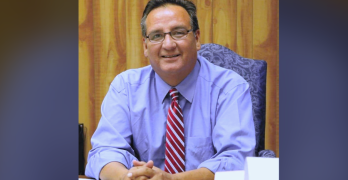
Friday, February 20, 2026 – Remembering Osage leader Jim Gray
Former Osage Principal Chief Jim Gray is remembered as a leader who laid the foundation for a modern, self-governing tribal structure while also reconnecting the tribe with its cultural roots. Among his many accomplishments as a transformative leader, Jim Gray spearheaded the historic reform of Osage government in 2004. That secured the individual right to vote for each Osage citizen rather than headright ownership and restored the Nation’s sovereign status. During his time as principal chief, the Nation also successfully negotiated a landmark $380 million settlement with the U.S. government — at the time the largest of its kind — addressing decades of tribal trust fund mismanagement. All the while, he remained a determined advocate for cultural and language revitalization. Gray walked on this month. We’ll hear from his family and friends about his legacy.
We’ll also remember Black civil rights leader, Rev. Jesse Jackson, who died this week at the age of 84. Jackson championed various Native causes throughout his career including opposition to nuclear waste dumping on tribal lands and support for the Dakota Access Pipeline protests.
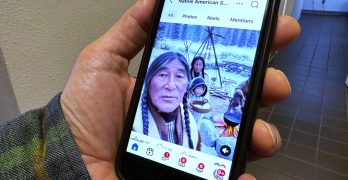
Thursday, February 19, 2026 – The growing AI appropriation threat
Native Americans have worked hard for decades to counter the stereotypes perpetuated in old movies and television shows about the American West. Now a new generation of Native technology experts worry that artificial intelligence is eroding that work. Scores of AI-generated images and videos are flooding people’s social media For You pages. The creations are within easy reach of anyone typing a prompt into any AI generator that scrapes information from millions of sources. Often posted by anonymous creators, the products of those prompts present vaguely Native visual and audio characteristics with little to no authentic cultural connections. Along the way they generate hundreds of thousands of admirers. We’ll talk about the work to counter the looming onslaught of AI cultural appropriation.


NAC @ Santa Fe Indian Market
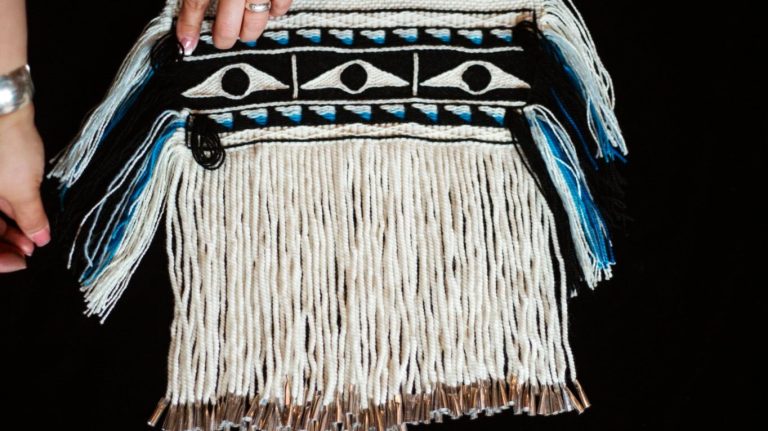
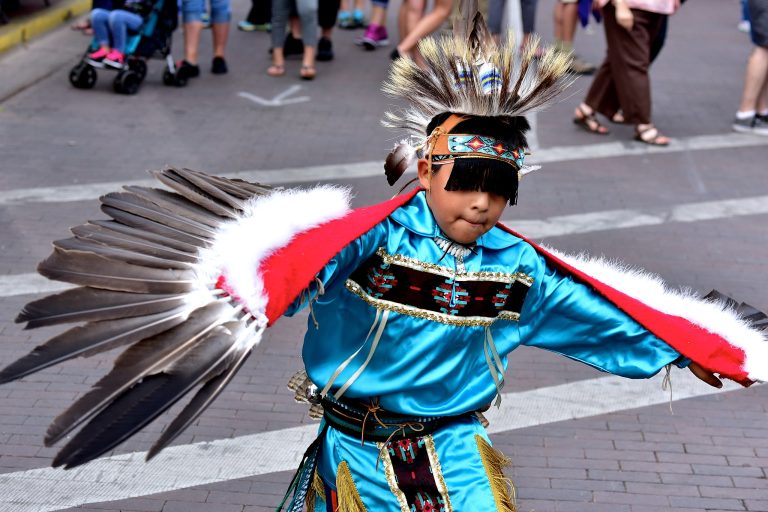
After 103 years, the Santa Fe Indian Market remains the biggest draw for Native artists, potters, and jewelry makers as well as those who appreciate and collect their work. More than 1.000 juried participants come from hundreds of Native communities, offering a hugely diverse range of inspiring work. We’ll take a small sample of that creativity and check in on the outlook for Native arts and arts education.
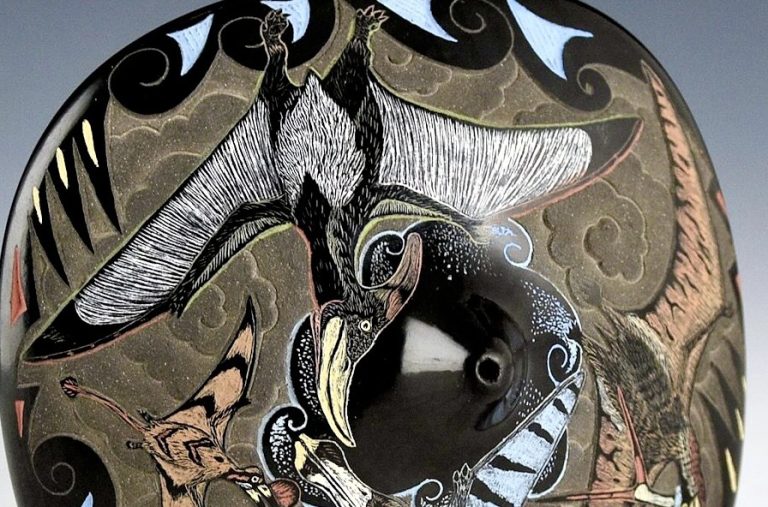
Distinctly Native American artwork, fashion, and films converge again for the annual Santa Fe Indian Market, with at least 1,000 booths and somewhere around 100,000 visitors. Native America Calling is live from Santa Fe, hearing from Southwestern Association for Indian Arts representatives, 2023 Best In Show winner Jennifer Tafoya, curators from the Native Cinema Showcase, and others to get a preview of the largest juried Native art market in the world.
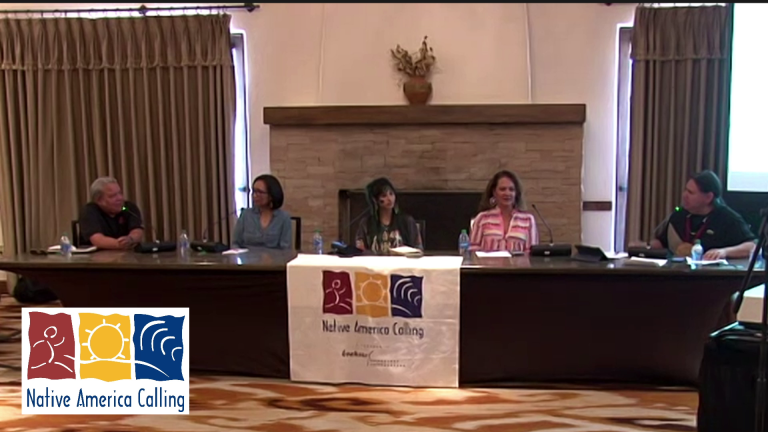
Listen back to Native America Calling’s live broadcast from the Santa Fe Indian Market featuring host Shawn Spruce and guests Dawn Houle (Chippewa Cree from Rocky Boy Montana), Mandolin Rain Song (Taos Pueblo), Jennifer Johns (Diné), and Jason Garcia (Santa Clara Pueblo).
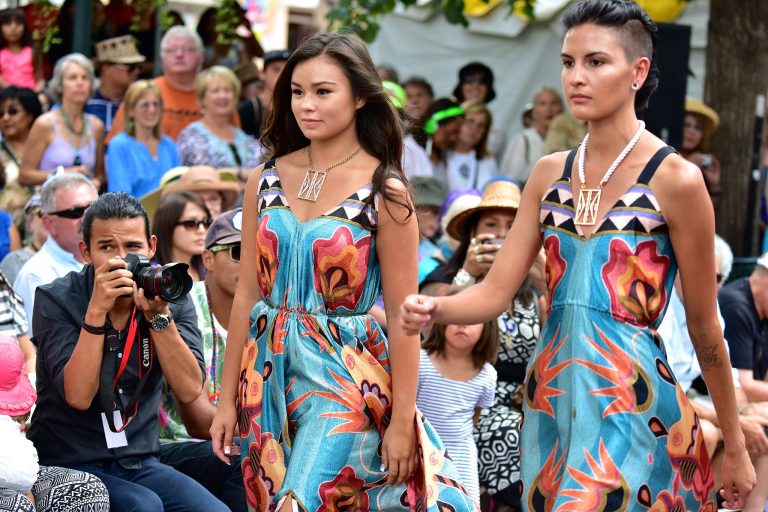
Artists from hundreds of Native nations are tending to their booths in the streets of Santa Fe, selling works they’ve labored for months to prepare. SWAIA’s Santa Fe Indian Market has come a long way in 100 years. Today on Native America Calling, Shawn Spruce is live from Indian Market for a second day with Dr. Suzanne Newman Fricke, director of Gallery Hózhó at Hotel Chaco; Dr. Robert Martin (Cherokee), Institute of American Indian Arts president, to get a feel for what’s in store for the next century; Amber Dawn Bear Robe (Siksika Nation), Indigenous Fashion Show producer for the Southwestern Association for Indian Arts and art history professor at the Institute for American Indian Arts; Dr. Jessica Metcalfe (Turtle Mountain Chippewa), owner of Beyond Buckskin; and Kristin Gentry (Choctaw), artist, photographer, writer, and curator.
It survived the Termination Era, The Depression, a World War, and, most recently, a pandemic. The Southwestern Association for Indian Arts marks the 100th Santa Fe Indian Market, a place to buy works directly from artists, to experience the creative vision of Native designers, and watch films by Indigenous filmmakers.
Today on Native America Calling, Shawn Spruce is live from the Market to get a rundown of this year’s schedule and reflect on the evolution of this major achievement of Native creativity and commerce with Cindy Benitez, program manager for the Native Cinema Showcase by the National Museum of the American Indian; film director Fritz Bitsoie (Diné);Stephine Poston (Pueblo of Sandia), board chair for the Southwestern Association for Indian Arts; and Leah Salgado (Pascua Yaqui), Chief Impact Officer for Illuminative.
