Podcast: Play in new window | Download (Duration: 55:37 — 38.2MB) | Embed
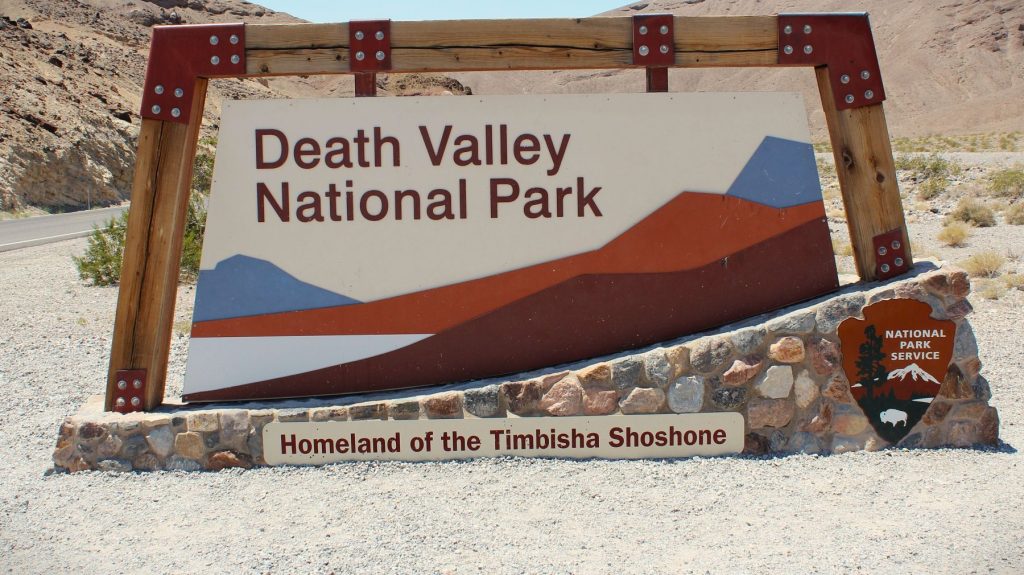
The Timbisha Shoshone Tribe just held an event to commemorate 25 years since the landmark legislation outlining a historic co-stewardship agreement between the tribe and the National Park Service in Death Valley. The tribe’s name is on the entrance sign to the park. At the same time, the Trump administration is calling for the removal of informational plaques in the visitor center that tells the tribe’s story. The sign’s removal is one of almost 20 at National Park sites around the country, including Little Big Horn Battlefield National Monument, the site of the allied tribes’ decisive victory over George Armstrong Custer and U.S. Army’s 7th Cavalry Regiment. We’ll talk to tribal representatives about how the information in National Parks was developed and what message removing it sends.
GUESTS
Dorothy FireCloud (Rosebud Sioux Tribe), retired assistant director of Native American affairs for the National Park Service
Otis Halfmoon (Nez Perce), retired National Park Service employee
Mandi Campbell (Timbisha Shoshone), tribal historic preservation officer for the Timbisha Shoshone Tribe
Gheri Hall (Blackfeet), co-director of the Tribal Historic Preservation Office for the Blackfeet Tribe
Break 1 Music: This Land (song) Keith Secola (artist) Native Americana – A Coup Stick (album)
Break 2 Music: Wahzhazhe (song) Scott George (artist) Killers of the Flower Moon Soundtrack (album)

Thank you for broadcasting this informative update on current policies. As a longtime fan of our national parks and keen on learning from Indigenous peoples with connections to place, this is quite disheartening. Removing signage and disparaging claims to homeland is an insult to locals and visitors alike. I will be updating information I share with friends and family.
On a sidenote, I have been experimenting with the new AI engines and used Gemini to summarize key points from this program. There may be errors, but here is what was generated:
AI-Generated Summary – There may be errors!: The episode focuses on a new directive from the Trump administration (in this 2026 timeline) ordering the National Park Service (NPS) to remove interpretive signage that references “settlers’ mistreatment of Native Americans,” “climate change,” and other “contested historical realities.” This move is part of an executive order titled “Restoring Truth and Sanity to American History,” which mandates that park materials align with “shared national values.”
Key Highlights and News Context
The Scope of Removal: Approximately 20 National Park sites have been targeted for sign removal or modification.
Death Valley National Park: The most prominent example discussed is the removal of informational plaques in the visitor center that tell the story of the Timbisha Shoshone Tribe. This is viewed as particularly egregious because the tribe recently celebrated the 25th anniversary of a historic co-stewardship agreement with the NPS. While the tribe’s name remains on the entrance sign, the deeper context of their history and displacement is being erased.
Other Affected Sites:
Little Big Horn Battlefield National Monument: Interpretive materials detailing the perspective of the allied tribes (Lakota, Cheyenne, Arapaho) and their victory over Custer are being targeted.
Glacier National Park: The Blackfeet tribe reports that brochures and signs acknowledging the 1870 Marias Massacre (where the U.S. Army killed over 200 Blackfeet, mostly women, children, and elderly) have been slated for removal.
Grand Canyon National Park: Signs referencing the forced displacement of Native tribes to create the park have been removed.
Guest Takeaways and Arguments
The panel of guests—including Dorothy FireCloud (Rosebud Sioux, retired NPS), Otis Halfmoon (Nez Perce, retired NPS), Mandi Campbell (Timbisha Shoshone), and Gheri Hall (Blackfeet)—provided the following insights:
1. A Betrayal of Co-Stewardship Mandi Campbell highlighted the irony and betrayal felt by the Timbisha Shoshone. After spending decades building a relationship with the NPS and securing legal rights to manage their ancestral lands within the park, the removal of their history from the visitor center signals a regression in that partnership. It implies the tribe is welcome as a “name” but not as a people with a difficult history.
2. “Whitewashing” History The guests argued that this policy is a deliberate attempt to “sanitize” American history. By removing references to massacres, displacement, and broken treaties, the administration is presenting a version of history that is comfortable rather than accurate. Otis Halfmoon emphasized that sites like Little Big Horn are graveyards and places of somber reflection, not just monuments to American military glory, and removing the Indigenous perspective dishonors the dead on both sides.
3. The Danger of “Shared National Values” The panel critiqued the language of the executive order (“shared national values”), arguing that it essentially codes for “settler colonial comfort.” They contended that accurate history includes the ugly chapters, and erasing them prevents visitors from understanding the true cost of establishing the National Park system.
4. Impact on Bureaucracy and Staff Dorothy FireCloud discussed the internal pressure on NPS employees. Many career staff and park rangers have spent the last decade working hard to include these underrepresented voices. This directive forces them to physically dismantle their own work, creating significant morale issues and ethical conflicts within the agency.
5. Broader Context The conversation linked these actions to a wider pattern, noting that signs referencing slavery (at Independence National Historical Park) and climate change (at Glacier and other parks) were also being removed under the same order. The guests viewed the attack on Native history as part of a larger war on factual accountability in public spaces.