Podcast: Play in new window | Download (Duration: 56:30 — 38.8MB) | Embed
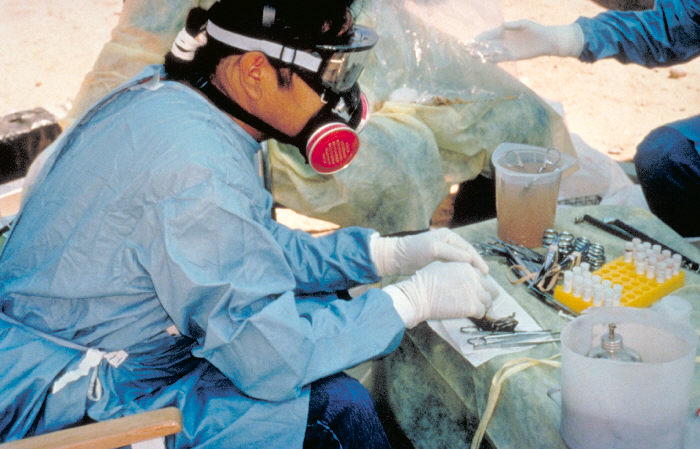
New infections aboard a cruise ship have thrust the hantavirus into the global spotlight. Hantavirus infections remain rare, with only about 1,000 cases reported in the U.S. in more than 30 years. What the world knows about the illness started in 1993 on the Navajo Nation. After struggling to identify the dangerous respiratory illness, medical researchers gained crucial insights from Navajo elders, noting that traditional oral histories had long associated spikes in deer mouse populations — driven by specific rainfall patterns — with deadly disease. That knowledge directly informed the scientific discovery of what we know now as the Sin Nombre virus. The discovery also offers a lesson in public notification of diseases. Early media reports labelled the pathogen as the “Navajo flu”, which stigmatized the community for years afterward. We’ll look at the history of the hantavirus and the current efforts to prevent its spread.
GUESTS
Dean Seneca (Seneca), CEO of Seneca Scientific Solutions+, adjunct professor at the School of Public Health and Health Professions at the University at Buffalo, and Adjunct Instructor at University of Rochester School of Medicine and Dentistry
Dr. Steven Bradfute, associate professor in the Center for Global Health at the University of New Mexico School of Medicine Department of Internal Medicine
Dr. Erin Phipps, New Mexico State public health veterinarian
Dr. Victoria Sutton (Lumbee), distinguished Horn Professor at Texas Tech University School of Law
Dr. Jonathan Iralu, Indian Health Service infectious diseases physician
Break 1 Music: Healing Song (song) Judy Trejo (artist) Circle Dance Songs of the Paiute and Shoshone (album)
Break 2 Music: Fearless I Live (song) Courtney Yellow Fat (artist) The Lost Songs of Sitting Bull (album)

Important framing here — Indigenous community knowledge has been a quiet pillar of the response. For folks following the MV Hondius situation more broadly, the public-source Hantavirus Tracker (https://hantavirustracker.fyi) aggregates WHO/ECDC/CDC daily updates and methodology notes. Purely informational, not medical advice.